“I used to think to think it was my rememory. You know. Some things you forget. Other things you never do. But it’s not. Places, places are still there. If a house burns down, it’s gone, but the place–the picture of it–stays, and not just in my rememory, but out there, in the world. What I remember is a picture floating around out there outside my head. I mean, even if I don’t think it, even if I die, the picture of what I did, or knew, or saw is still out there. Right in the place where it happened.”
-Toni Morrison, “Beloved“
Set in the post-Civil War era, Toni Morrison’s Beloved is a fictional narrative inspired by the real story of Margaret Garner, an escaped enslaved woman who saw no other option than to kill her child to avoid recapture in the face of the Fugitive Slave Act. Beloved follows Sethe, Garner’s roman à clef, as she grapples with the repercussions of this decision, literally haunted by her daughter and the trauma of slavery.
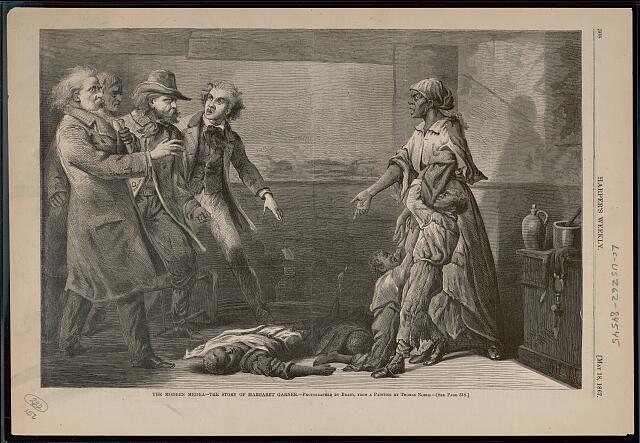
Morrison invites readers into the rememory surrounding Margaret Garner through a fictionalized haunting by a baby ghost. The ghost, representative of her mother’s desire to obtain her children’s freedom by any means necessary, terrorizes her family, symbolic of the generational trauma of slavery.

Beloved is not an isolated interaction with the past. It is also an invitation for us to continue to interact with history, beyond the scope of the book, as we walk through the modern world. Our communities are filled with opportunities that invite rememory. In fact, most people have experienced this sensation before, though perhaps without the words to describe it. You might locate it in the chills running down your spine as you walk through a museum built in the subject’s former home, or as you read headstones while walking through a cemetery. Crumbling stone sits on vacant land, stagnant and untouched, a physical reminder of the structures where people once lived, worked, and played.
Lewisburg is no stranger to this phenomenon. A walk through town reveals remnants of stops on the Underground Railroad, headstones of Civil War soldiers, homes which were once dependent on the labor of the enslaved. Re/Memory purposes to explore these opportunities to engage throughout the Bucknell and greater Lewisburg area, providing a guide for readers to independently explore such locations.
-Lily Hebda (editor), October 2025
Leave a Reply